
Ready to Take Cards at the Counter? What to Know About Credit Card Processing
Est. 4 min read · November 23, 2026
Customers are ready to buy, and they are reaching for a card, a phone, or a watch. If you can take that payment smoothly, the sale is easier to complete. If you cannot, or if the cost of taking it is hard to see, the counter gets awkward fast. Here's the first tip to take with you: ask for the all-in cost on a typical week, not only a headline figure, and make sure the setup fits how you actually sell — in person, online, or both.

What credit card processing is
Credit card processing is the path that takes a customer's card or digital-wallet payment, routes it for approval, and deposits the funds to your business, minus the costs set out in your agreement. The provider that gives you that path is often called a merchant account or a payments partner. Hardware, software, and support are part of the same setup: a countertop terminal, a handheld reader, a tablet, or an online checkout.

This is not a loan and not a line of credit. You are paying a cost to accept a form of payment your customers already use. Pricing, payout timing, and whether a partner can support your business are set by the processing partner, not by a lender's loan decision.
The honest reality: every card payment has a cost. The useful question is whether the setup fits the way you sell, and whether that cost is clear.
What to compare before you choose

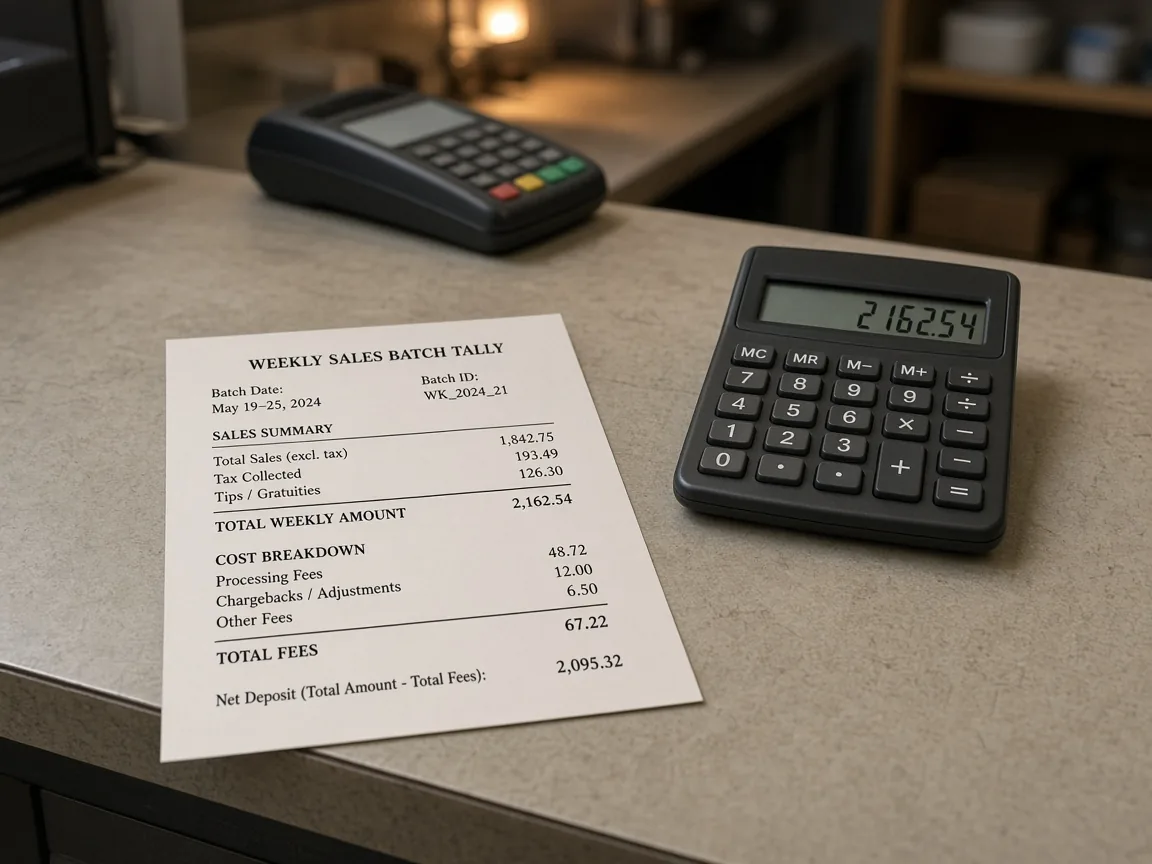
Ask each provider to explain pricing in terms of a typical week for your business, not only a single advertised figure. Pricing can be built in different ways, and a low headline number can still add up once monthly fees, equipment, chargebacks, and other line items are included.
Look at the contract length and what it costs to leave early. Ask how long it takes for funds to reach your bank, what happens when a payment is disputed, and how support works when the terminal stops working on a Saturday. Confirm whether you need in-person payments, online payments, or both, and whether the hardware or software fits the space you actually have — a counter, a booth, a phone, or a website.
Security and compliance obligations come with taking cards. Your processing partner should be able to explain, in plain words, what it handles and what you are responsible for. That conversation belongs on the list before you sign, not after the first busy weekend.
The honest reality: the best setup is the one whose costs, payout timing, and tools you can explain back in a few sentences.
How Call 4 Capital can help you get started
Call 4 Capital is not a card processor and does not set processing prices. We can point you to our credit card processing partner so you can review a merchant account and the tools that go with it. Our processing partner is very competitive on pricing, and you can start reviewing options right from our Credit Card Processing page. The partner decides whether it can support your account, sets the actual pricing for your business, and walks you through the setup. We cannot promise a specific rate, an approval, or a timeline.
If you also have a funding need — equipment, working capital, or another business-financing question — that is a separate conversation. We help you compare options from our lending partners; the lenders make the approval decisions.
The honest reality: processing and financing are different tools. Get the payments path clear first, then talk funding if you still need it.

Simple steps you can take this week
- Write down how you take payments today, and whether you need in-person, online, or both.
- Note a typical week: about how many card payments you take, and whether they are mostly small tickets or larger ones.
- List the tools you already have, such as a register, a tablet, a phone, or a website checkout.
- Ask each provider for the all-in cost, payout timing, contract length, and support hours, in writing.
- Walk through a chargeback or failed-terminal scenario so you know what happens when something goes wrong.
To look at card processing for your business, start on our Credit Card Processing page, or get in touch with Call 4 Capital if you want to talk first.